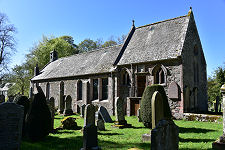
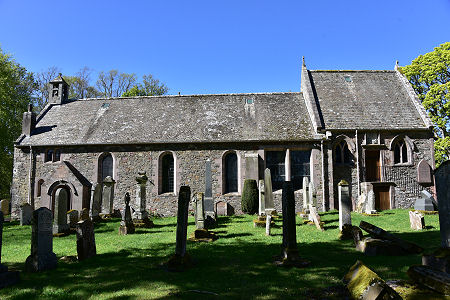
 Bowden Kirk from the South |
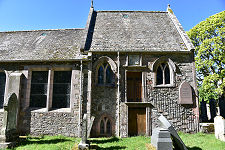
Bowden Kirk stands on the side of the valley of the Bowden Burn just to the south of the village of Bowden. This places it some two miles west of St Boswells and three south of Melrose.
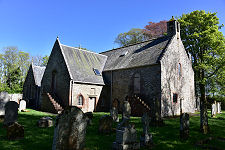
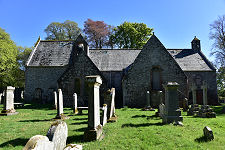
The main structure of the kirk is long and thin, aligned nearly from east to west, and it has two aisles projecting from the north side. At its east end, unusually, the chancel stands raised above the level of the nave by half a storey, rather like a shy tower.
The origins of Bowden Kirk date back over nine centuries. In 1113, the future David I founded a Tironensian (or reformed Benedictine) Abbey at Selkirk, while his father Malcolm III was still on the throne. Amongst the estates granted to the new abbey was land at Bowden. In 1128 the community moved from Selkirk to Kelso and began work on the abbey whose remains are visible today. Amongst the property transferred from Selkirk to Kelso Abbey was a church which had been established by the monks at Bowden. (Continues below images...)
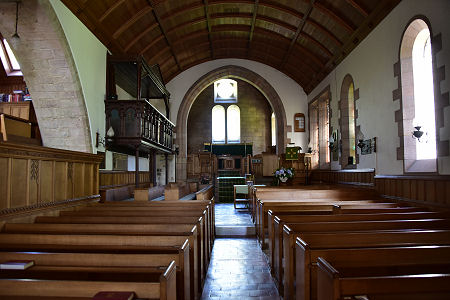 Inside the Kirk, Looking East |
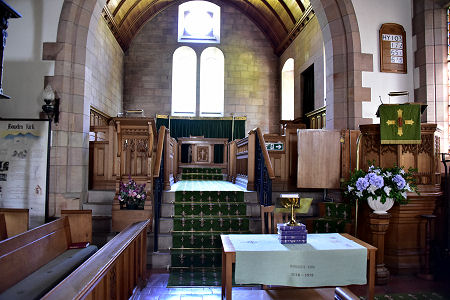 The Raised Chancel Seen from the Nave |
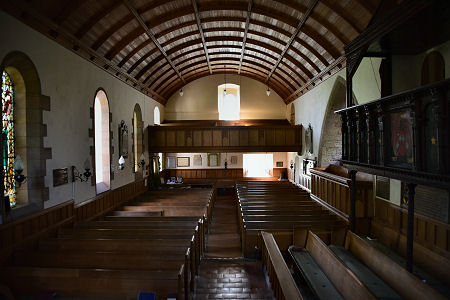 Inside the Kirk, Looking West |
The church was probably rebuilt on a number of occasions. The oldest identifiable remains in the current building are the north wall, complete with its opening into the organ loft, plus some vaulting, all of which date back to the 1400s. It is likely that the internal configuration of the church was altered after the Reformation, but evidence for this was lost in rebuilding work during the 1600s.
Another extensive rebuild took place in 1794, with the south wall being replaced. A further rebuild took place in 1909, when, amongst other changes, the roof was replaced and the windows in the south wall reshaped.
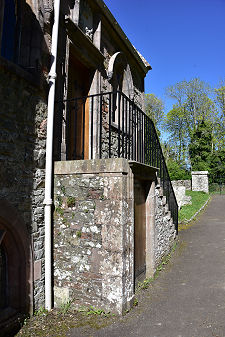
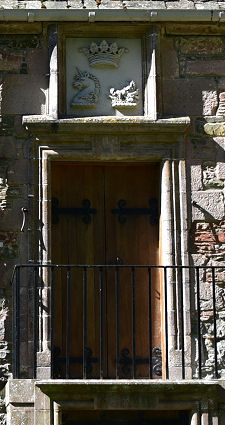
The external profile of the east end of the church, and the raised chancel, also date back to 1909. It seems likely that the original chancel fell out of use after the Reformation. In 1644, the Duke of Roxburghe had the east end walled off. The lower part became used as a family burial vault. An upper room was accessed by external stairs and a doorway (dated 1644) and probably formed a retiring room behind a "laird's loft" giving a view over proceedings in the nave beyond. Both the room and loft were removed in later rebuilds. The presence of the burial vault meannt that the replacement chancel constructed in 1909 had to be raised, and this in turn explains the raised roof at this end of the church.
One of the most striking internal features of Bowden Kirk today is a wooden gallery or "laird's loft" which stands against the north wall of the nave. This was built in 1611 for the family of Sir Thomas Kerr, and originally crossed the arch of the north transept. Behind it was a retiring room for the family while below that was the family vault. In effect the changes made in 1644 to the east end of the church by the Duke of Roxburghe echoed what the Kerrs had already done in the north transept.
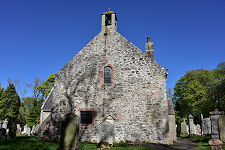
At least three bells have been used at Bowden Kirk. The main bell in use today hangs in the belfy at the head of the west gable. This is the Millennium Bell and was cast in Loughborough in 2001. A second bell which hangs at the corner of the vestry and chancel has been in use since 1924. The third bell is the oldest. This was replaced by the Millennium Bell and remains on display in the church. It carries an inscription dating it to 1690 and naming its maker as John Meikel of Edinburgh.
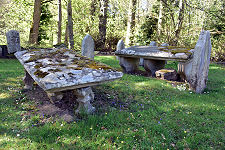
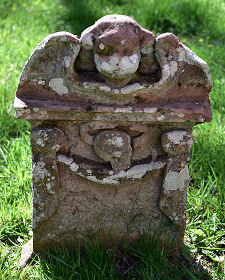
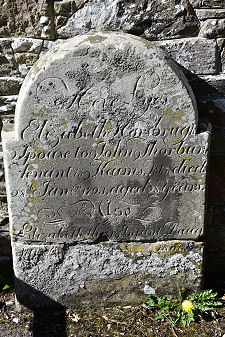
The surrounding kirkyard contains many old stones carrying the symbols of mortality so common on Scottish gravestones, especially in the 1700s. If you look carefully you can still find carvings of hourglasses, angels, skulls and crossbones: though many are heavily eroded and/or obscured by lichen.
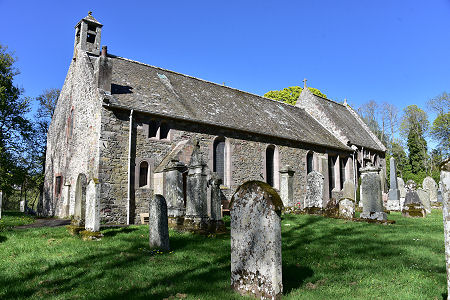 Bowden Kirk from the South-West |
|
|
|
Visitor InformationView Location on MapGrid Ref: NT 554 302 What3Words Location: ///denim.arrives.migrate |
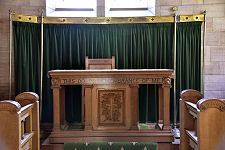 Communion Table |
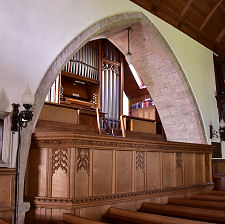 The Organ |
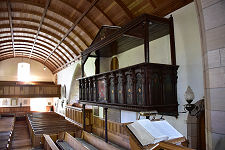 The Laird's Loft from the East |
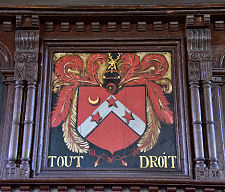 Crest on Laird's Loft |
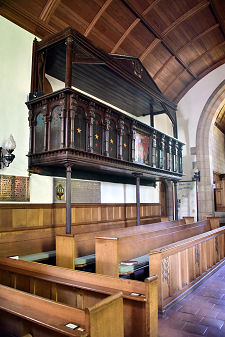 The Laird's Loft from the West |
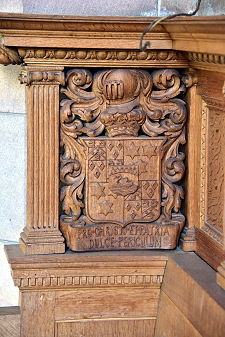 Intricate Carving in the Chancel |
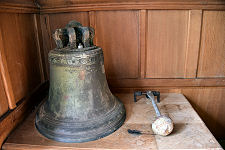 The 1690 Bell/span> |
 One of the Stained Glass Windows |
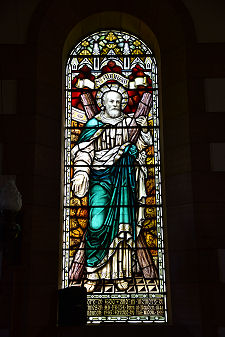 St Andrew |